How We Work
Sustainable high performance, and the light on every desk
Focused work is the most valuable thing our team does, and the easiest thing to take away from them. This is what we learned about protecting it, and the product we built to do it.
A developer is thirty minutes into a problem they have finally started to see clearly. Someone leans in with a quick question. It takes eleven seconds to answer.
Getting back to where they were takes considerably longer, and sometimes it does not happen at all. That gap between what an interruption costs the person asking and what it costs the person answering is the problem we set out to solve.
The language we now use for it came from a talk by James Hewitt, a human performance scientist, at the 2025 Global Leadership Summit. His argument is that the hustle model most workplaces run on quietly undermines the work it is meant to produce, and that the alternative is not working less but working in a way that rebuilds capacity rather than spending it. He calls it regenerative performance.
Three gears, not one speed
Hewitt is a former full-time racing cyclist, and the idea that stuck with us is borrowed from that world. A cyclist does not ride in one gear. They shift according to the terrain. Cognitive work is the same, and it runs in three gears.
- High gear
Deep, priority-driven work
Complete absorption in one hard thing. The most valuable and most fragile gear.
- Middle gear
Switching and admin
Email, meetings, coordination. Necessary work, but it should never pass itself off as the first gear.
- Low gear
Recovery
Rest and low-level activity, where the brain consolidates and prepares for the next high gear session.
The trap Hewitt describes is what he calls middle gear purgatory: switching constantly between tasks without ever reaching real focus or real rest. It feels productive because it feels busy. It produces neither peak output nor recovery. He cites research putting the cost of multitasking at roughly a 40% drop in productivity, and describes it, memorably, as failing at several things at once.
Feed your focus, starve your distractions.
James Hewitt, Global Leadership Summit 2025
Hewitt's own prescriptions are largely individual: batch your email, protect your peak hours, match hard work to your natural rhythm, treat sleep as an investment rather than lost time. All sound advice. But sitting in an open-plan office in Durban North, one thing was obvious to us. An individual cannot protect their high gear on their own. The interruption arrives from outside.
The part nobody says out loud
Every team already knows this problem. The reason it persists is social, not technical. Saying "please don't talk to me right now" is uncomfortable, and it lands badly, so most people never say it. They absorb the interruption instead, and the cost stays invisible.
So the design question was not how to enforce quiet. It was how to make focus visible without making anyone the person who asked for it.
What we built
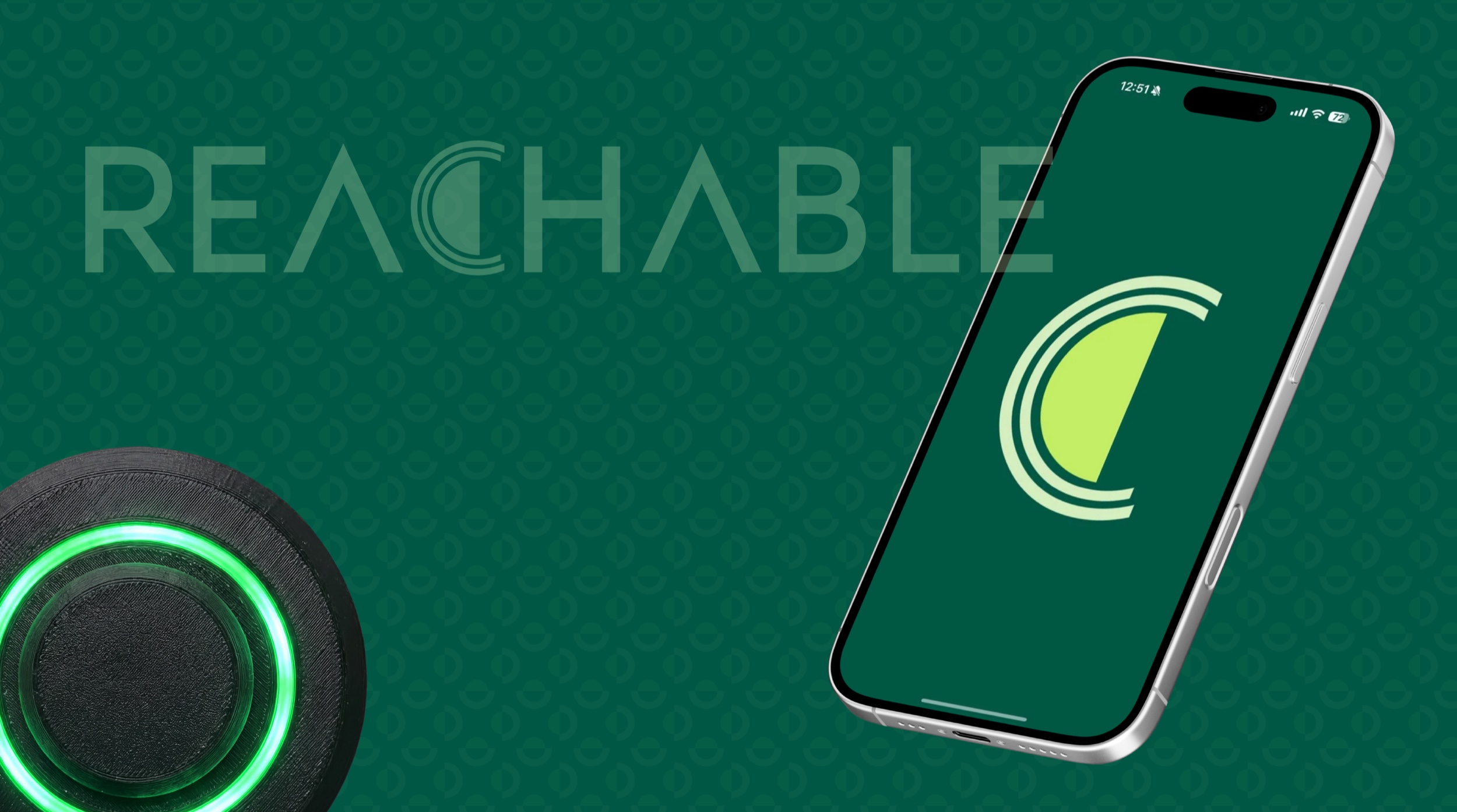
Reachable is a status you set for yourself, and everyone can see. There is a touch light on every desk. Tap it and your status changes, or set it from the app on your phone. Your colleagues see it on their own phones, or on the TV in each office, before they get up to walk over.
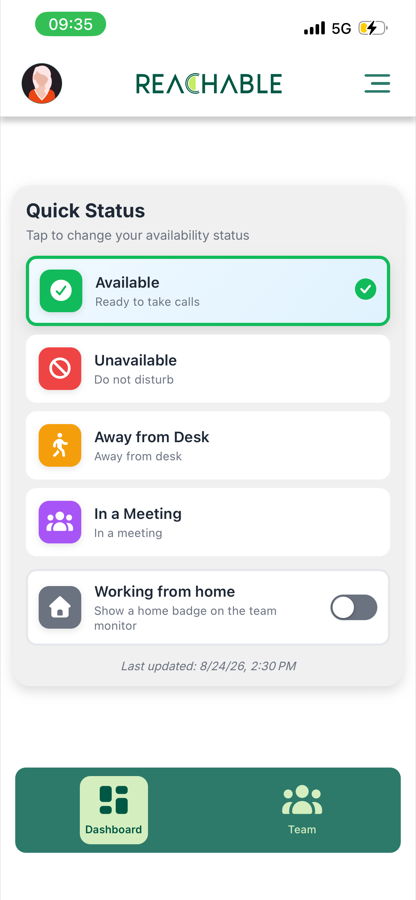
Available
I'm in a low or middle gear. Come and talk to me.
Unavailable
High gear. Unless it's urgent, it can wait.
In a meeting
Occupied, and not at my desk.
Away from desk
Back shortly.
Four states, one tap. The point of the light is not surveillance and it is not a do-not-disturb sign with better branding. It is a way for the team to hold a shared answer to a question they were otherwise all guessing at: is this a good moment?
Three things we did not expect
- 01
Red became easier than saying no
Setting a status is a neutral act. Nobody reads it as a rebuff, because it was not aimed at anyone.
- 02
Questions started arriving in batches
If you cannot interrupt now, you save it up. Two or three small questions arrive together later, which is one interruption instead of three.
- 03
Green got used as much as red
We expected a tool for shutting the door. What we got was a signal for opening it, which is the half of the system we had underestimated.
Hewitt frames the equation as effort plus recovery, and argues the two multiply rather than add. Reachable does not manage anyone's recovery, and it will not fix a culture that rewards visible busyness. What it does is small and specific. It takes the highest-value gear our team works in and makes it possible to protect without anyone having to ask.
That turned out to be enough to change the rhythm of the floor.